
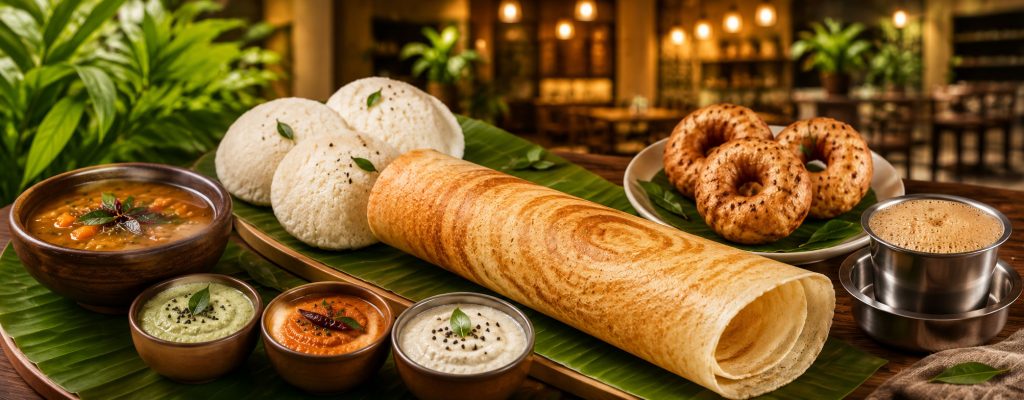
Visit any Indian city at 8 in the morning. You will see one thing: the queue outside the local idli-dosa shop is generally longer than the queue outside the posh coffee shop next door.
There is a reason for this phenomenon.
South Indian food has quietly become one of the most trusted, most craved breakfast and all-day meal options across the country. This is not just in Chennai or Bangalore but also in Delhi, Mumbai, Pune, and Lucknow. The trend is also in pretty much every city with a working population that needs something quick, filling, and, honestly, a little bit healthier than what’s usually on offer.
If you have been thinking about starting a food business and keep coming back to South Indian cuisine, you are not imagining this opportunity. It’s real, it’s growing, and it’s one of the more forgiving categories for a first-time entrepreneur to get into. Let’s talk about why.
Why South Indian Food, and Why Now
Every few years, something in the food world grabs attention. The Rolls had their day, too. Momos had theirs. Now, for more than a decade, coffee chains have been in the spotlight. South Indian food is something different. This is not a trend. It is a tradition passed down through the ages, and now it is getting the organized, branded treatment it deserves.
Think about what idli, dosa, vada, and filter coffee really offer. They are steamed or lightly cooked. They are made with simple, understandable ingredients like rice, lentils, and fermented batter. They don’t sit heavy in your stomach like a lot of fried, oily fast food.
That’s a real advantage in a country where lifestyle diseases and diet consciousness are becoming dinner-table conversations. Parents feel good about giving it to their children. Office workers have no problem eating it for lunch—no 3 PM food coma. Elderly customers, who are often suspicious of “modern” fast food, believe it because it’s the same food their mothers made.
And on top of that, India’s breakfast-out-of-home culture is booming. More people are traveling longer distances, more families have both partners working, and the whole ‘sit down and make dosa batter from scratch’ routine is something people want to outsource without compromising on taste. This is precisely where a franchise comes in: that gap between wanting authentic South Indian food and not having the time to make it.
A Low-Cost, High-Margin Business Model
Here’s where it gets particularly compelling for someone evaluating this venture as a real investment and not just a nice idea.
When done right, South Indian food has a very efficient business model behind it. The main products, such as idli, dosa, and vada, are made from batter prepared in bulk and dispensed throughout the day.
You don’t have the complicated, multi-step cooking procedures for every single order like a full-service restaurant does. Once the batter and chutneys are standardized, a trained cook or even semi-trained staff can consistently execute the menu. That means less reliance on expensive chefs, quicker service, and more control over food costs.
The ingredients themselves are also relatively cheap, and in their raw form, they have a long shelf life. Rice, urad dal, and basic spices don’t have the volatility or waste risk of, say, fresh seafood or exotic imported ingredients. Add to this the high daily foot traffic potential (breakfast, lunch, evening snacks, and filter coffee throughout the day), and you have a format with healthy margins relative to its investment size.
This is exactly why so many South Indian food brands have started setting up franchise systems instead of just opening more of their own outlets. The format is inherently franchise-friendly. It’s replicable, it doesn’t take up a huge kitchen footprint, and once systems are standardized (batter supply, recipes, and staff training), the quality is consistent whether you’re eating at the original outlet or one three cities away.
Franchise vs Starting a Restaurant from Scratch
For those new to the food business, the biggest fear is often “what if I get this wrong?” And that fear is valid because restaurants fail all the time, often because the owner is trying to figure out sourcing, recipes, pricing, and marketing from scratch, all while trying to manage day-to-day operations.
A good franchise removes much of the uncertainty. You’re not designing a menu. Customers elsewhere have already tested and liked it. You don’t keep experimenting with new sambar recipes until it tastes right; that recipe already exists and has been standardized. You are not trying to determine how much rent a 200 sq ft space can afford; the franchisor has the information from other locations.
What you are doing is working well for your particular location. You are selecting the right spot, hiring the right people, keeping the place clean and consistent, and building local relationships with nearby offices, residential societies, or colleges depending on where you set up. That’s a very different and much easier job than building a food brand from scratch.
South Indian Food Business Franchise Cost in India
One of the practical questions that anyone looking at this space has to answer early is:
How much do I want to invest, and what kind of outlet do I want to run?
There are two types of South Indian food franchises, including ours at Idloo, and it’s good to know the difference before you invest in either.
Idloo Kiosk Model: Investment & ROI
The kiosk model is for people who want to get into the food business but don’t want to make a huge upfront commitment. We are talking about a small space, maybe 200 square feet, that is built out for quick service. Look for areas with a high footfall: around metro stations, office complexes, busy market lanes, or food courts.
The investment here is about Rs. 10 lakh, which is super affordable for many first-time entrepreneurs, especially given what a full restaurant setup would cost. The format is lean—lower rent, smaller team, faster turnaround per order—so the return on investment tends to come quicker too, usually somewhere in the 8 to 10 month range. The royalty structure is the same across models, at 5%, so you know your ongoing commitment to the brand.
Idloo Dine-In Model: Investment & ROI
The dine-in model is designed for those seeking a more full-service restaurant experience, a place to sit down, spend more time, possibly order a bit more per visit, and make it a destination for a meal rather than a quick grab-and-go.
It requires more space, typically 600 to 1000 square feet, and, of course, a bigger investment in the Rs. 25 to 30 lakh range. The initial phase is a bit longer. ROI typically lands in the 14 to 16 month range. But the upside is a more powerful brand presence in that location, higher average order values, and the sort of loyal, regular customer base that a full sit-down format tends to build over time.
Neither model is objectively “better.” Ultimately, it depends on your available capital, the type of location you can access, and how involved you want to be. Some franchise partners even start with a kiosk to learn the basics and how the brand operates before scaling up to a dine-in outlet.
How to Choose the Best South Indian Food Franchise in India
Not all franchise opportunities are the same. And South Indian food, being such a hot category right now, has attracted its share of brands that are more marketing than substance. There are a few things worth exploring before you commit.
Ask about the supply chain. Do they supply the batter and main ingredients centrally, or do you have to go out and collect and make all the ingredients yourself? If the supply is centralized, that’s usually a reassuring sign because it means the brand cares about consistency and it’s not all up to you to get the fermentation right every single day.
Get a clear idea of what training and support really mean. Does the franchisor help you set up the outlet, train your staff, and support you through the initial launch period? Or are you given a logo and told to work out the rest? The difference matters enormously in your first six months.
Don’t just look at the headline investment figure. Dig into the numbers and see what they actually include. Are there hidden costs that come after you’ve already signed on, or do they include kitchen equipment, initial branding, staff training, and marketing support? A transparent breakdown of the investment, the expected ROI timeline, and the royalty structure is a good sign of a franchise that is confident in its own model.
Think about location fit. A kiosk model works in a high-footfall, quick-transaction environment. A dine-in model needs a catchment that has the time and inclination to sit and eat. The single biggest factor in how quickly an outlet becomes profitable is often putting the right format in the right location.
Talk to current franchise partners, if possible. There’s nothing like hearing directly from someone who is already running the same model you’re considering—how their launch went, what surprised them, and what they’d do differently.
South Indian Food Business Future: Market Growth & Trends
The food service industry in India is becoming more organized. Regional cuisines that were once limited to home kitchens or unbranded local eateries are increasingly finding their place as properly run, professionally managed brands. South Indian food is undoubtedly ahead of the curve here. It already has mass appeal across the country. It fits naturally into both quick-service and full-service dine-in formats and carries a level of trust that newer, more experimental cuisines just don’t have yet.
Whether it’s your first or an addition to an existing portfolio, if you’re looking to get into the food business, this is a category with real staying power, not a passing trend you’re chasing. And with franchise models of all shapes and sizes available today, the barrier to entry has never been lower.
Starting Your South Indian Food Franchise with Idloo
At Idloo, we’ve built our franchise on exactly that—proper South Indian food, with the right systems and support, makes for a really rewarding business for the right partner. Whether you’re drawn to the accessibility of our kiosk model or the fuller experience of our dine-in model, we work closely with our franchise partners from site selection through launch and beyond because our growth only happens when yours does too.
If you’ve been thinking about starting a food franchise and South Indian food keeps coming to mind, it’s probably worth following that instinct. Get in touch, and let’s discuss what a partnership with Idloo could look like for you.